

By Prisca Chinwe Eboh
For decades, Ndigbo have remained one of the strongest pillars holding Nigeria together economically, intellectually, commercially, creatively and socially. Yet, despite these immense contributions to nation-building, their region, the South East, has continued to remain politically marginalised at the highest level of governance.
Since the end of the civil war in 1970, no Igbo man has led Nigeria as President. The has always been that it is not yet the turn of the Igbo. More than 50 years later, one is forced to ask: when exactly will it be the turn of Ndigbo?
This question becomes even more disturbing when some South East politicians themselves now echo the narrative that it is not yet the turn of the South East to produce the country’s President. One is left to wonder if not now, then when? After another 50 years of exclusion? Or after every other geopolitical zone has ruled repeatedly?
The truth must be told honestly. Many of these politicians are not fighting for the interests of Ndigbo or for justice, fairness and equity within the Nigerian project. They are fighting to protect their political careers, preserve their personal relevance and maintain access to power structures that benefit their pockets rather than their people.
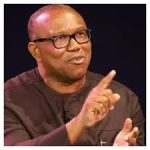
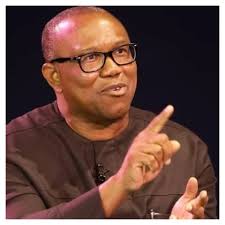
What makes the current political moment even more tragic is that, for the first time in modern Nigerian history, the nation has produced a presidential candidate in the person of Peter Obi, a man widely regarded across Nigeria and beyond as disciplined, prudent, competent, visionary and incorruptible. And he happens to come from the South East, a region that has remained excluded from the Presidency since the end of the civil war. In a truly fair Nigeria, these realities should strengthen the moral and political case for his leadership.
At a time when Nigerians are crying for transparency, accountability, fiscal discipline and genuine leadership, one would have expected the opposition parties and political leaders across the country to unite behind the most credible and widely accepted candidate capable of rescuing Nigeria from its current socioeconomic and political woods. But instead, what do we see? We see fresh alignments and calculations designed once again to keep power rotating among the same geopolitical interests that have dominated Nigeria since independence.
We see political parties preparing candidates from regions that have already occupied the Presidency multiple times, while the South East remains perpetually excluded from serious national consideration.
Whenever discussions arise about equity, fairness or the need for the South, and by extension the South East, to produce the President, the rules suddenly change. We are told that zoning no longer matters. The position is suddenly declared “open to all.” Yet somehow, this supposed openness never truly extends fairness to Ndigbo.
This recurring pattern creates a dangerous impression, which is that certain powers within Nigeria have collectively decided that the Presidency may rotate endlessly among other regions, but should never genuinely be entrusted to the South East.
The South East has excelled in commerce, education, entrepreneurship, entertainment, sports, medicine, technology and national development. Yet politically, the region continues to be denied a true sense of belonging within the Nigerian federation.
What message does this send to younger generations of the Igbo growing up today? That no matter how qualified, patriotic, hardworking, or competent they may be, there are still invisible political ceilings placed above them. The message is simply that they may contribute everything to Nigeria, but forever remain politically expendable within it.
Beneath all of this lies another uncomfortable truth: the fear of a genuinely disciplined, accountable, and incorruptible leader disrupting the entrenched political order.
Nigeria stands today at a defining crossroads. This moment is no longer about ethnicity or political party loyalty. It is about competence, integrity, national rebirth and the future survival of Nigeria itself.
Millions of ordinary Nigerians, including the youths, workers, traders, professionals, market women and men, are tired of corruption, wastefulness, insecurity, nepotism and leadership without vision. They are longing for a Nigeria where public office becomes a place of service rather than personal enrichment.
A Nigeria where prudence replaces reckless looting. A Nigeria where honesty replaces corruption. A Nigeria where hard work is rewarded. A Nigeria where public funds are treated as sacred. A Nigeria where citizens can once again hold their heads high with dignity and pride. That moment is now before us.
We must rise above division, political manipulation and fear. We must choose competence over tribal calculations, integrity over corruption and national progress over selfish political interests.
I call on the youths of Nigeria, the working class, students, artisans, professionals, market women and men, and all citizens, who genuinely desire change to rise and take back this country through the power of their votes. Nigeria belongs to all of us.
History is watching this generation. Posterity will remember whether we stood for justice, fairness, competence and national redemption or we remained silent while politics continued to deny millions of Nigerians a true sense of belonging and dignity.
The time to act is now.
Eboh, a legal practitioner, writes from Australia

More Stories
The indignity of a hero: The Professor Aghaji story
Debunking the lie ‘our votes don’t count’
Where Nigerians need Trump mostly